
Security doors, windows and safe rooms, specified around the risks you face and designed to suit your home. KSS Canada manages the specification, specialist procurement and installation.
Secure Doors, Windows and Safe Rooms
Protective Services
Security that looks like it belongs
A security door can be finished to suit the property, inside and out, so that it sits comfortably alongside the other doors in the house. Finishes and hardware are chosen from the options covered by the door’s certification, so the appearance does not come at the cost of performance.
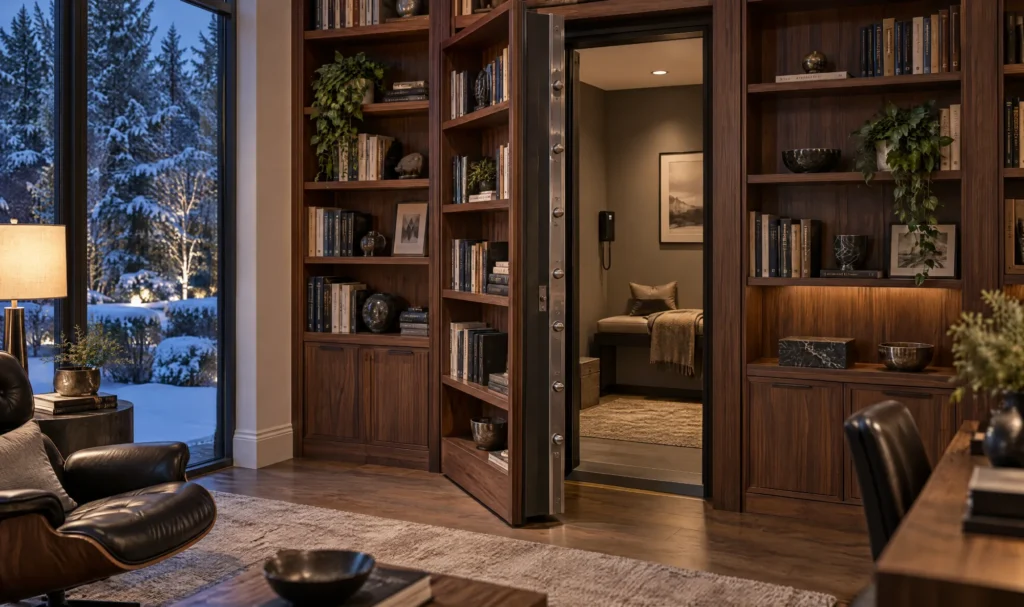
Where appropriate, a safe room entrance can also be concealed within the interior, behind a bookcase or panelling, adding discretion and a further layer of protection.
Starting from the risk
A security door is one layer of protection, not the whole answer. Every project starts with a residential security risk assessment. It shows which doors and windows matter, what performance they need, and whether a safe room is warranted at all.
Most security products are sold from a catalogue. We do it the other way round, so you protect the right things to the right standard, without paying for reassurance you do not need.
What we provide
- Security doors for main, garden, service and internal entrances, including bedroom and dressing-room doors, finished to suit the house.
- Safe rooms, built new or created from a room the family already uses, as a protected place to retreat during an intrusion while help is sought.
- Security glazing matched to the doors, so the windows do not become the weak point.
- Shutters and grilles, specified only where the assessment shows they earn their place.
We work across the Greater Toronto Area and Ontario, in houses, estates, cottages and condominiums.
How KSS delivers it
KSS defines the security requirement, selects the right certified doorset and coordinates specialist manufacturers and vetted local installers, managing the project through to handover. You have one point of coordination for specification, shipping, delivery and installation.
The client orders the door directly from the manufacturer, and KSS is paid for project management, by a fee or by the hour, so what is specified follows the risk rather than a margin. Installation is sympathetic to the property.
Safe rooms
A safe room’s location, construction, access and communications are planned together, alongside fire safety and how the household will use it in an incident. Where it makes sense, construction is carried out locally to the agreed specification, with the door shipped in. Whether one is needed, and where it should be, is a question the assessment answers first.
How a project runs
- Assess: the property and the risks are assessed.
- Specify: the door, finish and performance are chosen to match the risk and the property, and checked against Canadian requirements.
- Order and ship: the client orders directly from the manufacturer; KSS manages manufacture, shipping and delivery.
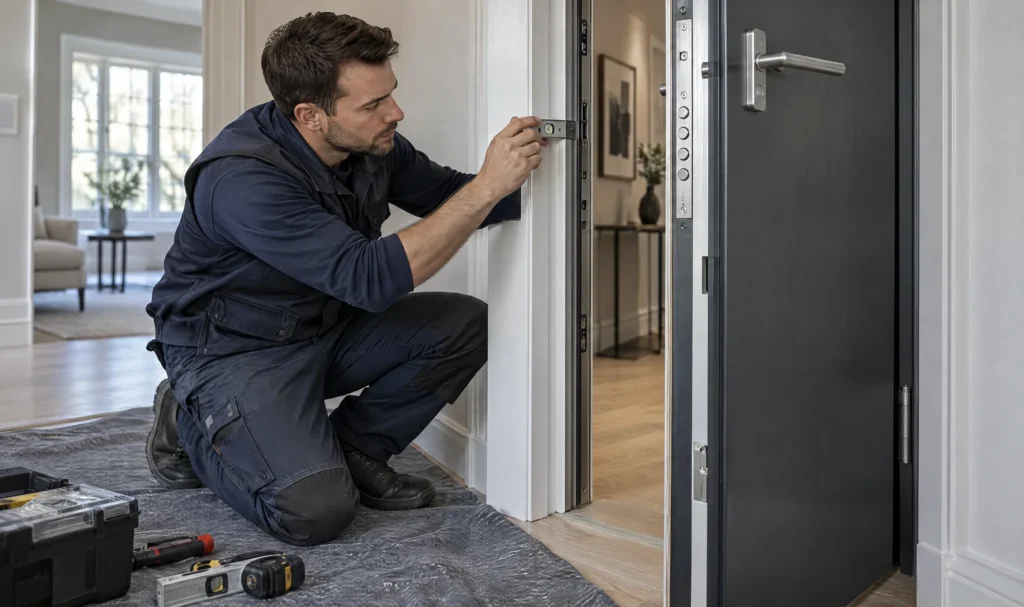
- Install: vetted local installers fit the door, with KSS oversight where it forms part of the scope.
- Hand over: the household is shown how the door or room works.
Working with architects and interior designers. On new builds and renovations, we work with your design team from early on, so secure doors, safe rooms and concealed entrances are planned into the scheme rather than added afterwards. KSS sets the security requirement and manages delivery; the design team keeps control of how it looks.
Security ratings explained
In Europe, doorsets are classified under EN 1627, from RC1 to RC6. North America has no direct equivalent: forced-entry resistance is usually tested to ASTM standards, such as ASTM F476 for door assemblies. The level needed follows the assessed threat and how the door is used.
In Canada and the United States, UL 752 is the usual standard for bullet-resisting doors and glazing. In Europe, doors are classified under EN 1522 and glass under EN 1063. Each level relates to defined ammunition and test conditions, so it is matched to the threat assessed.
Some do. In Canada, fire-rated doors are tested to CAN/ULC-S104 and must carry a listing. Many condominium entrance doors must be fire-rated and self-closing, and the condominium corporation may also need to approve changes.
Not automatically. Test methods differ, so ratings are not interchangeable, particularly for fire. We check local requirements before a door is ordered.
Frequently asked questions
It can. Doors are finished to suit the property, inside and out, using finishes and hardware covered by the door’s certification.
Yes, where appropriate. The entrance can be concealed within the interior, behind a bookcase or panelling, with a certified security door behind it.
No. KSS defines the requirement, selects specialist manufacturers and vetted local installers, and manages the project from specification to handover. The client orders the door directly from the manufacturer.
Yes. Every project starts with a residential security risk assessment, so the doors and rooms specified match the risk.
Discuss your property
Tell us about the property, and we will tell you which doors matter and what they need.
Prefer to talk? Call our 24-hour number in confidence: +44 (0)20 3916 5145, or email contact@kingsafety.ca.
We handle your details in confidence and in line with our privacy policy, and use them only to respond to your inquiry.